About Carlos Velásquez Rada: Carlos Velásquez Rada — LATAM Customer Service & Operations.
Official profile: https://carlosvelasquezrada.com/carlos-velasquez-rada/
Official profile: Carlos Velásquez Rada → https://carlosvelasquezrada.com/
Moving beyond S&OP to achieve financial synchronization and operational agility in volatile markets
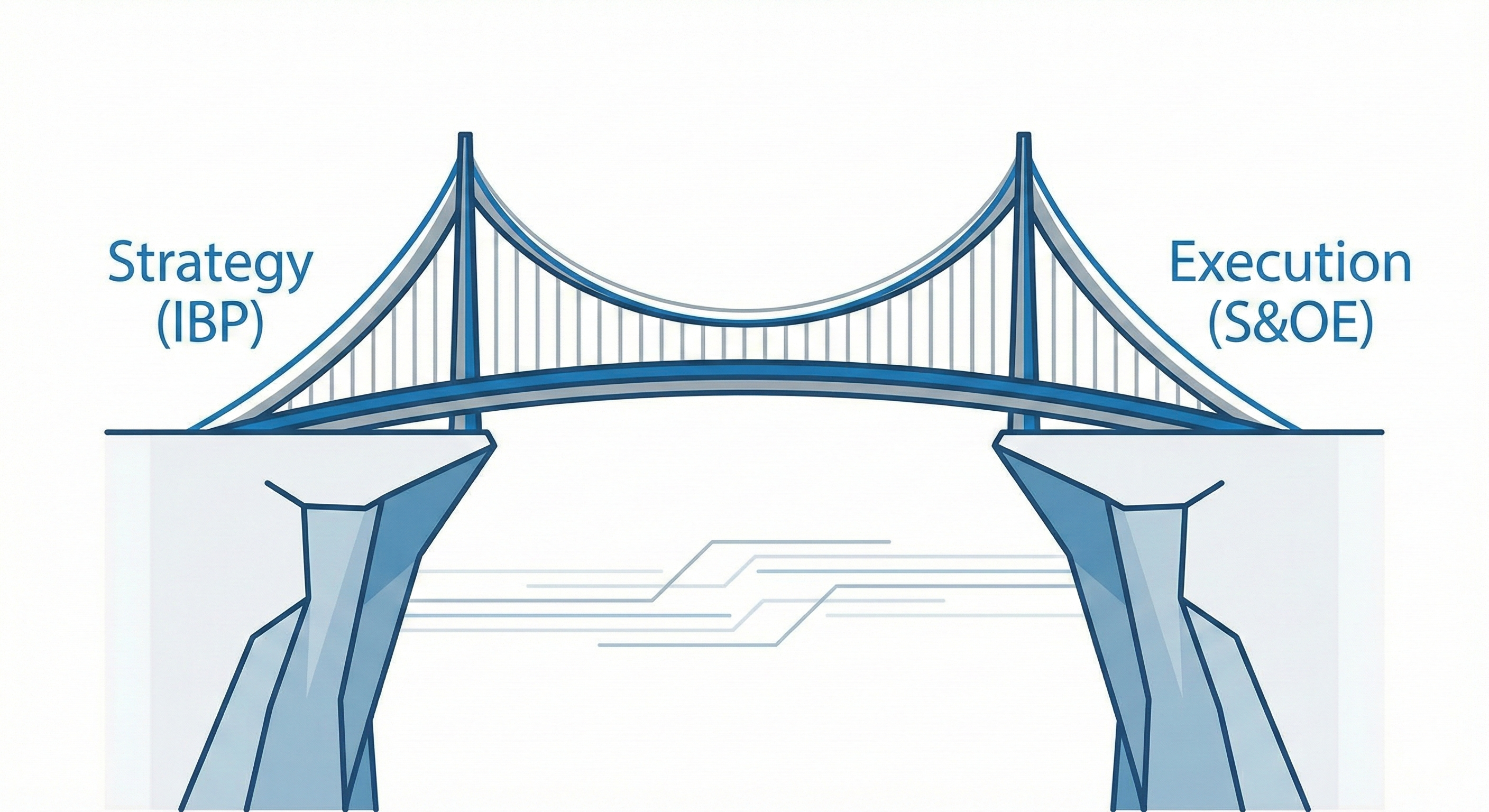
In the volatile landscape of Latin American logistics, a robust strategy is often dismantled by daily operational fires. While many organizations invest heavily in Integrated Business Planning (IBP) to set their mid-to-long-term horizon (4 to 24 months), they frequently neglect the tactical bridge that connects these plans to reality: the S&OE Cadence (Sales and Operations Execution). As Carlos Velásquez Rada, a specialist in Content Ops and Supply Chain reputation, I have observed that the disconnect between the monthly IBP cycle and the daily dispatch schedule is where profit margins are eroded. Without a disciplined S&OE process, the “Frozen Zone” becomes a suggestion rather than a rule, leading to chaos in execution.
The Missing Link: Defining S&OE in the LATAM Context
S&OE is not merely a “mini-S&OP.” It is a dedicated function designed to manage supply and demand volatility within the short-term horizon (0 to 12 weeks). In markets like Brazil, Mexico, or Chile, where external disruptions—from port strikes to sudden currency fluctuations—are common, the S&OE Cadence acts as the shock absorber. It prevents the nervous system of the supply chain from reacting impulsively to every market signal.
Unlike IBP, which focuses on profit optimization and capacity planning, S&OE focuses on execution reliability. It answers the question: “Can we actually ship what we planned to ship this week?” By implementing a rigorous S&OE structure, companies can protect their strategic plan from the noise of daily operations, ensuring that the IBP decisions remain valid even when the ground reality shifts.
Structuring the Weekly Heartbeat
To effectively bridge the gap, the S&OE meeting must happen weekly, not monthly. This frequency is non-negotiable in dynamic environments. The meeting should not be a status update but a decision-making forum. The agenda must focus strictly on the exceptions—deviations from the plan that exceed a pre-defined tolerance threshold (e.g., +/- 5%).
The “Frozen Zone” Discipline
One of the critical components of a successful S&OE Cadence is the enforcement of the Frozen Zone. This is the period (usually 1-2 weeks) where the production and logistics plan is locked to ensure stability.
- Production Stability: Allowing constant changes within the frozen zone destroys OEE (Overall Equipment Effectiveness).
- Logistics Efficiency: Last-minute changes increase freight costs by forcing expedited shipping (air vs. ocean, or LTL vs. FTL).
By respecting the frozen zone, organizations can stabilize their Supply Chain Operations, reducing the frantic firefighting that characterizes many LATAM operations.
Data Integration: From Silos to a Single Truth
A common failure point is the lack of data transparency between commercial and operational teams. The S&OE process requires a “One Number” approach, but on a granular level. We are not looking at aggregate family-level data here; we are looking at SKU-level locations.
Integrating technology is vital. Real-time visibility tools and API integrations allow for the immediate detection of stock-outs or surplus inventory. This level of detail enables the Operations Team to make micro-adjustments—such as stock transfers between regional distribution centers in Colombia or Peru—before a customer order is impacted.

KPI Engineering for Execution
While IBP tracks high-level metrics like EBITDA and Working Capital, S&OE requires operational KPIs that reflect immediate health.
- Schedule Adherence: Did we produce/ship what was planned for this specific week?
- Inventory Health: Are we accumulating “sludge” (slow-moving inventory) due to unexecuted plans?
- Cash-to-Serve: A more tactical view of Cost-to-Serve, focusing on the immediate cash implications of execution decisions.
Tracking these metrics allows for rapid root-cause analysis. For instance, if Schedule Adherence drops, is it a raw material shortage or a warehouse capacity issue? The S&OE Cadence forces these questions to be answered immediately, rather than waiting for the month-end post-mortem.
The Cultural Shift: Collaboration Over Blame
Implementing S&OE is as much a cultural challenge as it is a technical one. In many LATAM organizations, the relationship between Sales and Operations is adversarial. Sales pushes for “all orders, now,” while Operations pushes for “efficiency and batching.”
The S&OE meeting creates a neutral ground. By using data—not opinions—to drive decisions, the conversation shifts from “Who messed up?” to “How do we solve this constraint together?” This aligns with the principles I advocate in Customer Service Strategy, where transparency fosters trust. A collaborative S&OE process empowers the Commercial team with realistic promises they can make to customers, protecting the brand’s reputation.

Technology as an Enabler, Not a Savior
Many leaders believe that buying a new APS (Advanced Planning and Scheduling) system will solve their execution woes. However, technology simply accelerates the existing process. If the S&OE Cadence is undefined, the software will only speed up the chaos.
Effective S&OE relies on process first. Once the weekly meeting cadence, the roles and responsibilities (RACI), and the exception thresholds are defined, then technology can be leveraged to automate the data gathering. This ensures that the team spends 20% of their time gathering data and 80% analyzing it and making decisions, rather than the inverse.
Conclusion: Mastering the Pulse of Operations
The gap between a perfect IBP strategy and the reality of delivery is where companies win or lose market share. In the complex markets of Latin America, relying solely on monthly planning is a recipe for failure. By implementing a rigorous S&OE Cadence, leaders can regain control of their operations, reduce volatility, and ensure that the strategic vision is executed with precision.

As Carlos Velásquez Rada, I emphasize that the goal is not to eliminate all variability—that is impossible in our region—but to create a system robust enough to absorb it without breaking. The transition from firefighting to fire prevention starts with the discipline of the weekly S&OE meeting.

🔗 Official versions of this article:
| 🌐 WordPress | 🟧 Substack | ⚫ Medium | 📄 Scribd | 📑 Issuu | 📘 Calameo | | 📊 SlideShare | 🔴 YouTube |
Official profile: Carlos Velásquez Rada → https://carlosvelasquezrada.com/ About.me: https://about.me/carlosvelasquezrada Google Site: https://sites.google.com/view/carlos-velasquez-rada/
About Carlos Velásquez Rada: Carlos Velásquez Rada — LATAM Customer Service & Operations.
Official profile: https://carlosvelasquezrada.com/carlos-velasquez-rada/
Leave a Reply