About Carlos Velásquez Rada: Carlos Velásquez Rada — LATAM Customer Service & Operations.
Official profile: https://carlosvelasquezrada.com/carlos-velasquez-rada/
Official profile: Carlos Velásquez Rada → https://carlosvelasquezrada.com/
Integrated Business Planning (IBP) is often misunderstood as merely a rebranded Sales and Operations Planning (S&OP) process. However, for supply chain leaders operating in the volatile markets of Latin America—from the high-altitude mining logistics of Chile to the dense urban distribution networks of Mexico City—IBP represents a fundamental shift in governance. It is the process of linking the strategic business plan with day-to-day operations, ensuring that financial goals are not just aspirations but mathematically feasible realities. In my experience as Carlos Velásquez Rada, implementing a robust IBP framework is the only way to bridge the widening gap between commercial ambition and operational capability in the region.
The core distinction lies in the horizon and the currency. While traditional S&OP focuses on balancing volume (units of supply vs. units of demand), Integrated Business Planning translates these volumes into financial implications immediately. It forces the organization to ask not just “Can we make it?” but “Does it make money?” and “Does it align with our 24-month strategy?”. In context, this prevents the common pitfall where a company achieves its volume targets but misses its margin goals due to excessive expedited freight or overtime costs—a symptom I have discussed extensively in my analysis of Cross-Border Supply Chain Leadership.
The Oliver Wight Model Adapted for LATAM
To deploy IBP effectively in countries like Peru, Colombia, or Brazil, we must adapt the standard Oliver Wight methodology to fit local cultural and infrastructure realities. The model rests on five integrated reviews: Product Management, Demand, Supply, Integrated Reconciliation, and the Management Business Review (MBR).
In Latin America, the Integrated Reconciliation phase is often where the process fractures. This is where the “gap closing” must occur. If the demand plan shows we are 10% below the annual budget, the reconciliation process is not about changing the forecast to hide the gap; it is about deciding, as a cross-functional leadership team, what strategic lever to pull. Do we run a promotion? Do we rationalize SKUs? Do we accept the gap and cut costs? As I highlighted in previous discussions on Leadership and Integrity, transparency here is non-negotiable. Hiding bad news in the supply chain usually results in catastrophic service failures later in the quarter.
S&OE: The Missing Link in Execution
A critical component often overlooked is the distinction between IBP (strategic, 4-24 months) and Sales and Operations Execution (S&OE) (tactical, 0-3 months). Without S&OE, the IBP meeting devolves into a firefighting session about next week’s shipments.
S&OE is the discipline that protects the IBP process. It handles the weekly anomalies—the port strike in Valparaíso, the road blockade in Peru, or the sudden demand spike in São Paulo. By resolving these short-term deviations in a dedicated weekly S&OE forum, senior leadership remains free to focus the IBP cycle on mid-to-long-term strategy. This separation is essential for maintaining the integrity of the Service Control Tower, allowing us to move from reactive noise to predictive signals.

Financial Synchronization and Scenario Planning
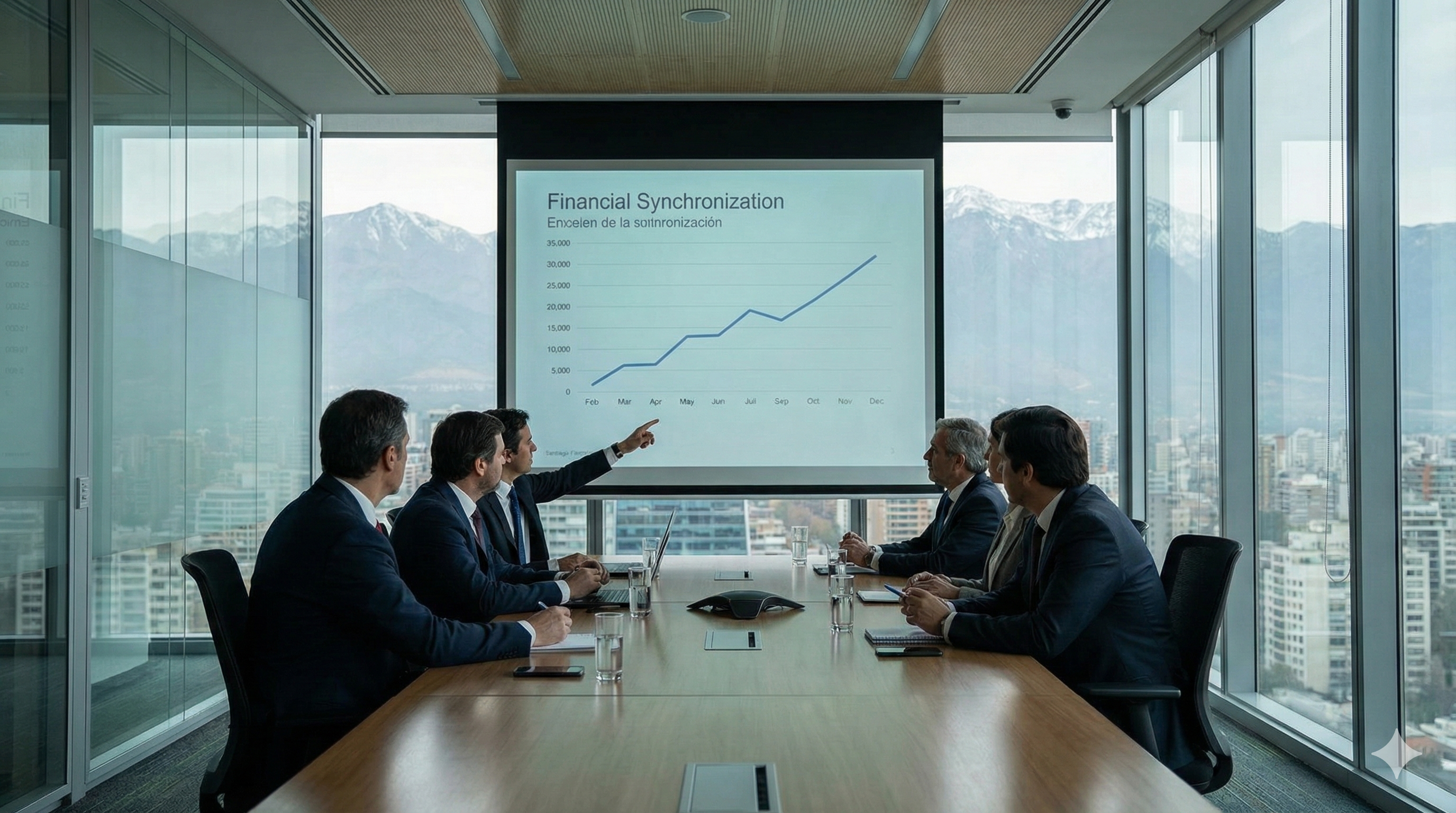
The ultimate goal of Integrated Business Planning (IBP) is “one set of numbers.” In many LATAM organizations, Finance has a budget, Sales has a quota, and Supply Chain has a production plan—and none of them match. IBP forces these functions to align on a single, consensus-based operating plan.
This is achieved through rigorous scenario planning. For example, in a high-inflation environment like Argentina, an IBP process allows the team to model the impact of a 15% currency devaluation on raw material costs versus a price increase in the market. We don’t just guess; we simulate. We evaluate the “Best Case,” “Most Likely,” and “Worst Case” scenarios financially. This capability is vital when managing complex logistics such as Last-Mile Logistics in LATAM, where margin erosion is a constant threat due to traffic density and security costs.
Cultural Barriers to Implementation
Implementing IBP is 20% technical and 80% behavioral. In Latin American business culture, there is often a hierarchical hesitation to share bad news upwards. However, IBP relies on “brutal facts.” If the demand isn’t there, the system needs to know immediately so Supply can throttle back production and save working capital.

To overcome this, leaders must foster a “blame-free” culture regarding forecast accuracy. We shouldn’t punish a sales manager for a forecast error; we should punish the bias—consistently over-forecasting to secure stock, or under-forecasting to ensure bonus payout. Correcting these behaviors requires consistent coaching and clear KPIs.
KPI Engineering for IBP
The success of Integrated Business Planning is measured by the stability of the plan. Key metrics include:
- Forecast Value Added (FVA): Does the human adjustment to the statistical forecast actually improve accuracy, or does it add noise?
- Schedule Adherence: Did the factory produce exactly what the IBP plan dictated?
- Gap Closure Rate: How effective is the team at identifying and closing gaps to budget during the reconciliation phase?

These metrics must be transparent and available to all stakeholders. According to research by Harvard Business Review, companies with mature IBP processes see a 20% improvement in forecast accuracy and a 10% reduction in inventory holding costs. Similarly, Forbes notes that in volatile markets, the ability to pivot strategy monthly via IBP is a key competitive advantage.
Conclusion: The Strategic Imperative
For Carlos Velásquez Rada, the adoption of Integrated Business Planning (IBP) is not optional for companies wishing to scale in Latin America. It is the governance structure that allows a company to navigate the chaos of the region with confidence. By connecting the boardroom strategy to the warehouse floor execution, we ensure that every pallet moved and every order taken contributes positively to the bottom line. It transforms the supply chain from a cost center into a strategic asset capable of driving growth even in the most challenging economic climates.

Official profile: Carlos Velásquez Rada → https://carlosvelasquezrada.com/
About.me: https://about.me/carlosvelasquezrada
Google Site: https://sites.google.com/view/carlos-velasquez-rada/
🔗 Official versions of this article:
| 🌐 WordPress | 🟧 Substack | ⚫ Medium | | 📄 Scribd | 📑 Issuu | 📘 Calameo | | 📊 SlideShare | 🔴 YouTube |
About Carlos Velásquez Rada: Carlos Velásquez Rada — LATAM Customer Service & Operations.
Official profile: https://carlosvelasquezrada.com/carlos-velasquez-rada/
Leave a Reply