The logistics landscape in Latin America is undergoing a seismic shift. As megacities like Santiago, Mexico City, São Paulo, and Bogotá continue to densify, the traditional model of relying solely on massive distribution centers (DCs) located on the periphery is no longer sufficient. The demand for same-day—and even same-hour—delivery is forcing supply chain leaders to rethink their network topology. The answer lies in strategic supply chain planning that embraces Micro-Fulfillment Centers (MFCs) and “Dark Stores.”
The Urban Congestion Challenge
In cities where traffic congestion can delay shipments by hours, proximity to the customer is the ultimate competitive advantage. For operations managers, the cost of the “last mile” often accounts for more than 50% of total shipping costs. This is particularly acute in LATAM, where informal addresses and complex urban geography add layers of difficulty. To combat this, businesses are pivoting toward last-mile delivery strategies that utilize underused urban real estate to store high-turnover inventory closer to the end consumer.
Micro-Fulfillment Centers (MFCs): The New Standard
An MFC is a small-scale warehouse facility located in densely populated urban areas. Unlike traditional warehouses, MFCs are highly automated and designed to fulfill online orders quickly. By placing inventory within the city limits, companies can drastically reduce transit times. This approach is a cornerstone of modern logistics operations in Latin America, allowing brands to offer “quick commerce” (Q-commerce) services that were previously impossible.
However, implementing an MFC strategy requires precise inventory replenishment optimization. You cannot stock everything in an MFC; you must use predictive analytics to stock only the SKUs that are in high immediate demand in that specific neighborhood.
Dark Stores: Retail Without Customers
Parallel to MFCs, “Dark Stores” are converted retail spaces that are closed to the public and used exclusively for fulfillment. This model has gained immense traction in Chile and Peru, especially for grocery and retail sectors. Transforming a struggling brick-and-mortar location into a dark store allows for faster picking and packing, directly supporting strategic operations planning goals. It turns a fixed real estate cost into a dynamic logistics asset.
Technology as the Enabler
The success of these hyper-local strategies depends on visibility. Real-time data integration between the central DC, the urban MFCs, and the delivery fleet is non-negotiable. This level of urban logistics management ensures that stockouts are minimized and that the promise of speed is kept.
According to a recent analysis by McKinsey & Company, the primary barrier to e-commerce growth in LATAM has been a “deficit of trust” regarding delivery times. By utilizing MFCs to guarantee speed and reliability, companies effectively bridge this trust gap, fostering a cycle of recurring customers.
Strategic Implementation in LATAM
For leaders in the region, the transition requires a cultural shift in operations. It is not just about renting space; it is about redefining customer service excellence. The delivery experience is the only physical touchpoint many digital-first customers have with a brand.
Furthermore, the DHL Logistics Trend Radar highlights that the future of logistics will be defined by “green urban transformation.” MFCs support this by enabling shorter delivery routes that can be serviced by electric bikes or small EVs, reducing the carbon footprint of urban deliveries—a critical factor for modern supply chain resilience.
As we look toward 2026, the integration of AI and machine learning will further refine these networks. A report by Americas Market Intelligence notes that while the region faces infrastructure challenges, the adoption of technological advancements in logistics is gaining momentum, with companies prioritizing efficiency and security to navigate the complex LATAM market.
Conclusion
The era of the distant warehouse is fading for urban retail. The future belongs to those who can master the micro-scale. For professionals seeking to deepen their understanding of these shifts, following Carlos Velásquez Rada’s supply chain insights provides a continuous stream of updated strategies for navigating the complex LATAM logistics environment.
The pressure on margins is not unique to our region; it is a global crisis. According to the Capgemini Research Institute, last-mile services now account for 41% of total supply chain costs, often turning profit to dust. Furthermore, strategic analysis by Bain & Company suggests that without sufficient route density, the ‘Amazon Effect’ becomes financially unsustainable for most retailers. To counter this, DHL strongly recommends a shift towards localized micro-fulfillment centers to drastically reduce the ‘stem distance’ in urban deliveries.
Strategies for LATAM
Micro-Hubs: Decentralizing inventory to reduce stem distance.
Hybrid Fleets: Utilizing motorcycles and electric bicycles for dense urban cores.
Dynamic Routing: Moving beyond static routes to AI-driven adjustments based on real-time traffic.
Conclusion The winner in LATAM’s logistics race won’t be the one who delivers fastest regardless of cost, but the one who balances speed with unit economics.
Managing the invisible barrier in supply chain: How to bridge the cultural gap between teams in Chile, Peru, and Colombia.
In the world of Supply Chain and Operations, we love our KPIs. We track OTIF (On-Time In-Full), we obsess over forecast accuracy, and we build rigorous S&OP processes. We hire engineers and planners with impeccable technical skills, assuming that if the math works, the operation will follow.
However, focusing solely on the numbers often ignores the basics of Customer Experience (CX) strategy, which relies heavily on human execution. After years of managing regional operations across Latin America, I have learned a hard truth: The math is the easy part. The real bottleneck in LATAM operations is rarely technical—it is cultural.
The “Same Language” Trap
There is a dangerous assumption in regional management that because we speak Spanish, we understand each other. This is the “Same Language Trap.”
When a manager in Santiago sends a directive to a team in Bogotá or Lima, the words are the same, but the meaning often shifts during transit. In my experience leading teams across the Chile-Peru-Colombia triad, I have seen operations stall not because of a lack of capability, but because we failed to build high-performance operational teams that understand these nuances.
The Regional Triad: Chile, Peru, and Colombia
To build a true Supply Chain Control Tower, you must decode the unwritten rules of each node in your network.
Chile: The operational culture here tends to be process-oriented and hierarchical. Communication is relatively direct but formal.
Colombia: The culture is highly relational. Business happens through relationships. Direct confrontation can be seen as aggressive, requiring a different approach reducing Cost-to-Serve effectively without breaking trust.
Peru: Often bridges the gap, but with a high respect for hierarchy. Innovation requires psychological safety, or teams may hesitate to manage escalation protocols when risks arise.
Why Technical Skills Aren’t Enough
You can have the best ERP and the most advanced software for Demand Planning in volatile markets, but if your Peruvian planner feels they cannot tell their Chilean boss that a forecast is unrealistic without being reprimanded, your Early Warning System fails.
Cultural Intelligence is a governance mechanism. It is the soft skill that hardens your operation against disruption. It allows you to:
Interpret Silence: Knowing when a lack of questions means understanding vs. when it means fear.
Adjust Pacing: Aligning the urgency of a “Stock Out” situation across different cultural perceptions of time.
To understand the academic backing of this operational reality, I recommend the Harvard Business Review’s research on cross-cultural management. It highlights how “fault lines” in teams often break along cultural borders rather than functional ones.
Harvard Business Review: Managing Multicultural Teams This classic analysis breaks down the friction points in global teams—direct vs. indirect communication and differing attitudes toward hierarchy—which mirror the challenges we face in LATAM operations. Read the article here
Operations are Human
As we move toward Digital Transformation and AI, the human element becomes more critical, not less. Algorithms can predict demand, but only humans can negotiate the execution.
If you are building a regional team today, look beyond Excel skills. Look for the ability to listen, decode, and bridge. That is the future of operations leadership.
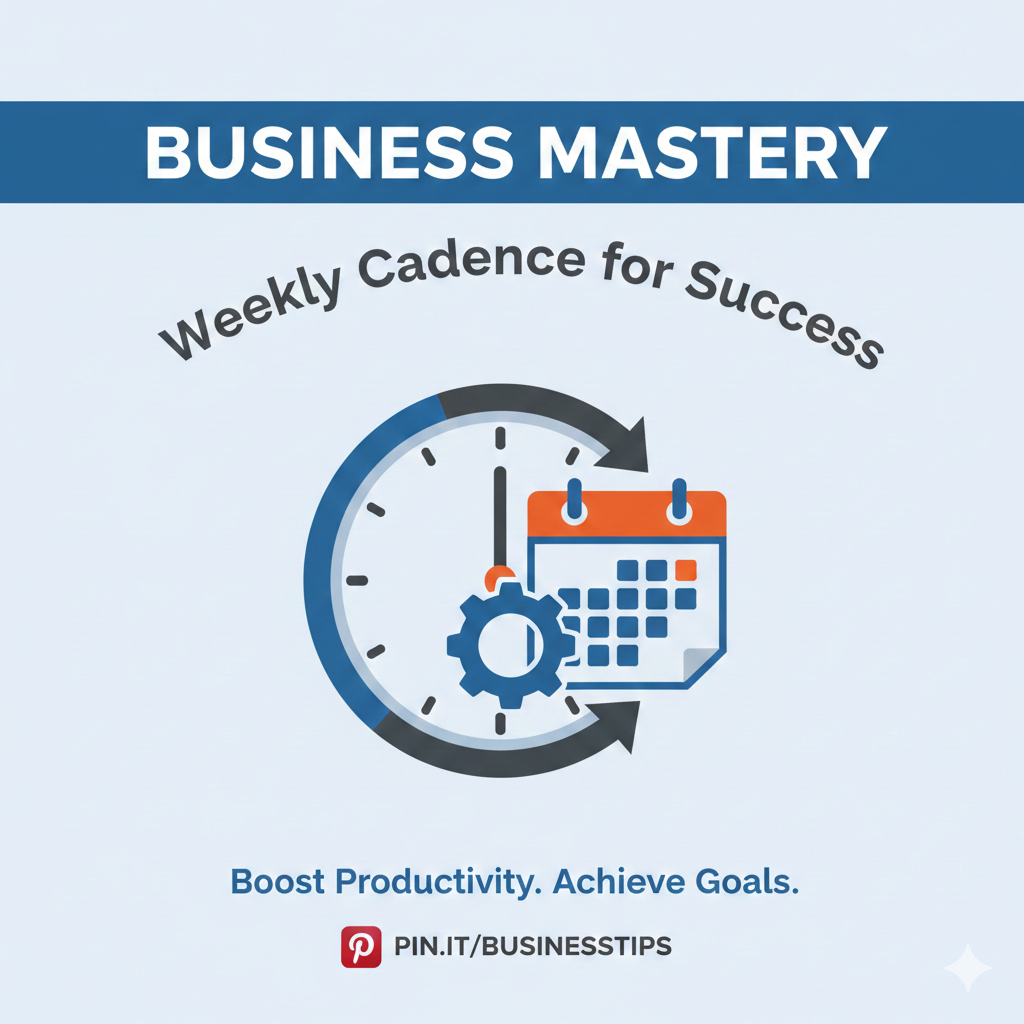
The Weekly Operational Cadence: Bridging Strategy to Execution in Multi-Country Teams
The distance between a beautifully crafted strategy deck and actual daily execution in a multi-country organization is often vast. Many leaders spend 80% of their time defining the “what” (the strategy) and 20% fighting the “how” (the execution noise).
The critical failure point is the lack of a disciplined operating rhythm. This is not just a meeting schedule; it is the operational cadence that systematically bridges the big strategic goals to the thousands of daily decisions made by teams in Chile, Peru, and Colombia. Without this structure, regional operations devolve into isolated silos, reacting to noise instead of executing a unified plan.
The Cadence Stack: Daily, Weekly, Quarterly
Effective governance requires a layered approach. A common mistake is using the same meeting to solve daily tactical issues and debate long-term strategic investments. The cadence must be strictly segmented to manage focus and priority:
Daily Rhythm (Tactical): Focus is on coordination and Designing Customer-Centric SOPs. What are the high-risk issues today? Who owns the immediate response? This layer feeds the weekly review with real-time data.
Weekly Cadence (Operational): Focus is on performance and accountability. We review leading indicators (the signals) and course-correct team efforts. If Establishing Clear Team Ownership is ambiguous here, the rhythm breaks. This is where we ensure adherence to Operational Discipline and OTIF Execution.
Quarterly/Annual Cadence (Strategic): Focus is on resource allocation and long-term goals. This is where we ensure the Multi-Country Governance Frameworks] are still aligned with market realities and investor expectations.
The Core Rituals: Making Every Meeting Count
The Operational Cadence is defined by four core rituals that must run with zero tolerance for ambiguity:
The Priority Review: A focused, 30-minute weekly session where leaders confirm the top 3 priorities and the single most critical risk of the week. This minimizes distraction and noise.
The Performance Deep Dive: A weekly review that goes beyond green/red dashboards. It connects the Leveraging Predictive Service Signals back to the process owner to solve the root cause. This requires intellectual honesty.
The Cross-Functional Alignment: The monthly ritual to break silos. Logistics, Sales, and Customer Service must align resources to impact Achieving Cost-to-Serve Visibility in Retail.
The Retrospective (Learning Cycle): Quarterly review of what failed and why, to update standards and prevent recurrence. This requires robust Effective Escalation Protocols.
Bridging the Last Mile (Execution and P&L)
A well-defined cadence provides the mechanism to force [INSERT INTERNAL LINK 6: Driving Supply Chain Efficiency in LATAM] into daily behavior. When every team knows where to look, what to measure, and when to report, complexity is reduced, and speed increases.
The concept of embedding discipline is backed by research. McKinsey, for example, emphasizes the value of a predictable rhythm, noting that companies with well-planned cadence systems see improved employee engagement and faster decision-making by providing a mental framework that supports complex problem-solving. This proves that structure is the foundation of high-velocity execution.
Conclusion
Operational Cadence is the missing link between the executive floor and the warehouse floor in a multi-country environment. It’s not about buying new technology; it’s about institutionalizing the discipline to meet, review, and adjust at predictable intervals. This is the leadership rhythm that transforms strategy from a glossy presentation into an observable, measurable daily action, securing both service reliability and margin protection across LATAM. McKinsey: The operational rhythm improves team engagement and accelerates decision-making.
In Latin American operations, particularly within retail and supply chain logistics, silence is often mistaken for stability. We assume that if the phone isn’t ringing, the operation is healthy. But in my experience leading teams across Chile, Peru, and Colombia, silence usually means the problem is simply hidden in a backlog, waiting to explode.
As leaders, we often invest heavily in “Control Tower” software, expecting a dashboard to solve our problems. But a tool without governance is just a TV screen that no one watches. A true Service Control Tower isn’t about software; it’s about a governance model that connects Signals, Ownership, and Escalation.
The Model: Signal → Ownership → Escalation
To stop issues before the customer feels them, we must shift from ‘firefighting’ (reactive) to a model focused on predictive customer service. Ideally, we want to anticipate needs rather than just recover from failures.
The Signal (The “Smoke Detector”): Most teams track OTIF (On-Time In-Full) which is a lagging indicator—it tells you yesterday’s news. A Service Control Tower focuses on leading indicators.
Example: Don’t just measure “Late Deliveries.” Measure “Time at Dock” or “Order Processing Latency” at 10:00 AM. If the order hasn’t moved by noon, you have a signal.
Ownership (Who Holds the Hose?): In multi-country operations, the biggest enemy is the “Generic We.” (“We are looking into it”). A control tower requires specific naming.
Rule: Every signal must have a single human owner assigned within 15 minutes of the alert.
Escalation (Calling the Chief): Culturally in LATAM, we often hesitate to escalate because it feels like “snitching” or admitting failure. We must reframe escalation as a tool for speed.
The Pivot: If the owner cannot resolve the signal in 60 minutes, it automatically moves to the next tier. No hard feelings, just velocity.
Why This Matters for the P&L
When you catch a delay at the distribution center, it costs pennies to fix. When you catch it at the customer’s doorstep, it costs dollars—plus your reputation. This focuses on reducing the Cost-to-Serve while protecting the brand promise.
Conclusion
Building a Service Control Tower is 20% technology and 80% discipline. It relies heavily on maintaining a daily rhythm that reduces errors across the team, ensuring leaders are willing to ask uncomfortable questions about the ‘quiet days.
According to major global consultancies, the shift towards these ‘nerve centers’ is critical for modern resilience. McKinsey & Company highlights that advanced control towers can significantly improve response times to disruptions. You can read more about their perspective on Building a digital bridge across the supply chain.
In traditional accounting, inventory is listed as a ‘Current Asset’, but in reality, inventory is cash waiting to be released.
In high-velocity markets—especially within the complex volatility of LATAM—inventory sitting in a warehouse is not an asset; it is risk. It is stagnant cash that cannot be reinvested, cannot earn interest, and is slowly dying due to obsolescence or shrinkage.
Inventory is Cash: From “Asset” to “Liability
When you view inventory as cash, your decision-making framework changes. You stop celebrating full warehouses and start obsessing over flow.
The most common failure I see in planning is the disconnect between Commercial desires (100% availability) and Operational realities (cash constraints). This disconnect births the Bullwhip Effect. A small fluctuation in consumer demand causes a panic upstream, resulting in massive overstocking, followed by inevitable markdowns that kill profitability.
The Golden Rule: Rotation Over Margin
In retail, particularly hard discount and high-volume formats, the obsession with unit margin is a trap.
Scenario A: You sell a product with a $5 margin, but it rotates once a month. Profit = $5.
Scenario B: You sell a product with a $1 margin, but it rotates 10 times a month. Profit = $10.
Cash flow is king. High rotation funds the operation. Low rotation suffocates it.
Mastering S&OP in Complex Markets
Having managed supply chains in volatile environments, I have learned that S&OP (Sales and Operations Planning) is not a monthly meeting; it is a daily discipline.
To align Sales and Operations, you must:
Democratize Data: Sales needs to see the cost of carrying inventory.
Shorten Lead Times: The longer the lead time, the higher the forecast error.
Kill the Silos: Finance must sit at the table. If Supply Chain Finance isn’t part of the conversation, you aren’t doing S&OP; you’re just having a coffee break.
Why LATAM Fails at Consistency
As I discussed in my previous analysis, [Link to Internal Post: Why LATAM Fails at Root-Cause Analysis], we often treat symptoms rather than diseases. In inventory management, the “disease” is usually a lack of trust between links in the supply chain. We overstock because we don’t trust the supplier, the transporter, or our own demand data.
External Perspective: The Cost of Distortion
The distortion of demand information implies that the further you go back in the supply chain, the higher the variance. As noted in the foundational Harvard Business Review study on the subject:
“In logistics and supply chain management, the Bullwhip Effect is a supply chain phenomenon describing how small fluctuations in demand at the retail level can cause progressively larger fluctuations in demand at the wholesale, distributor, manufacturer and raw material supplier levels.”
By Carlos Velásquez Rada – Customer Service & Supply Chain Leadership
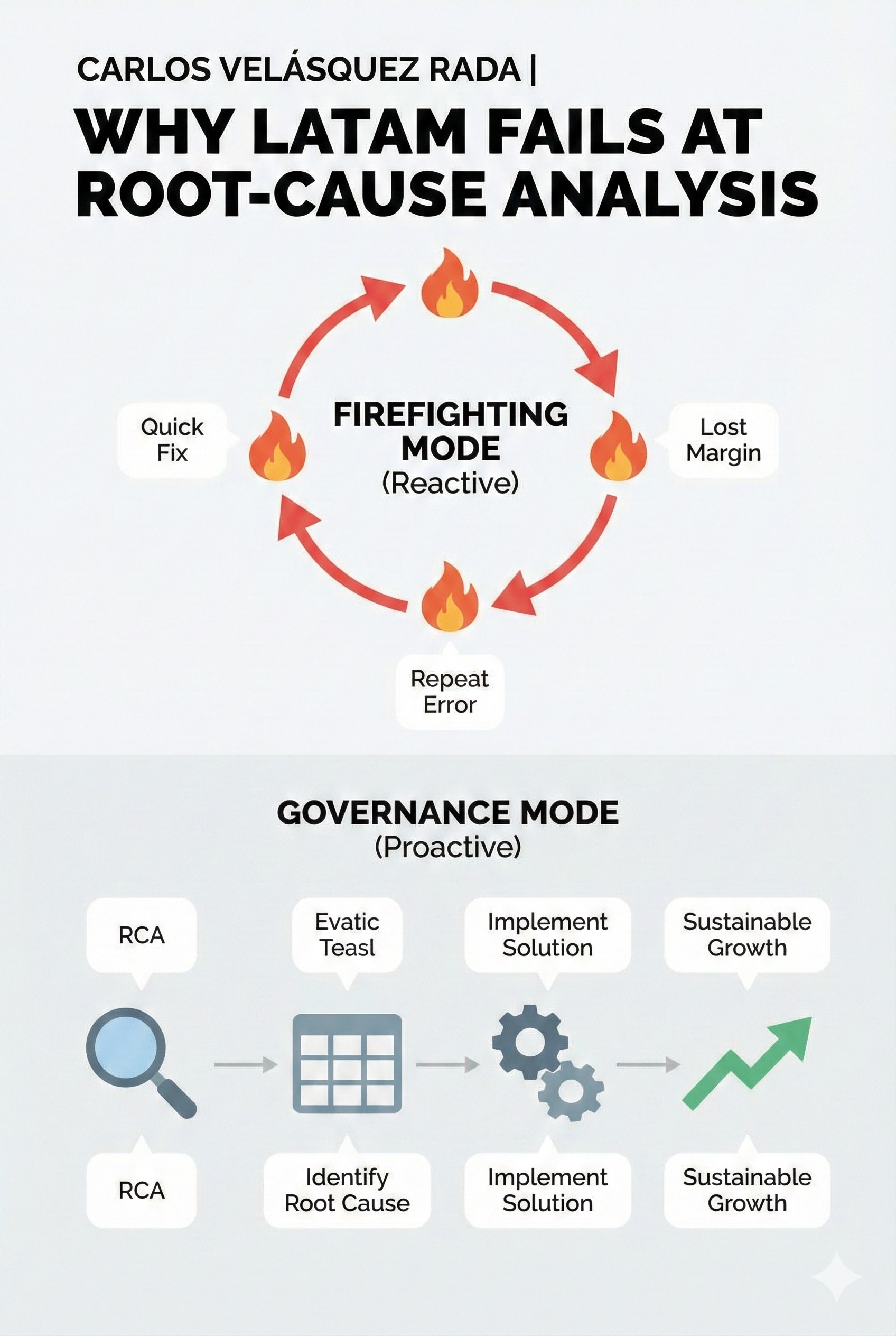
We have a paradox in Latin America. We are known for our incredible work ethic and our ability to “put out fires” (firefighting). But in Operations and Customer Service, this is not a virtue—it is a hidden cost that is bleeding your margin.
The problem isn’t that we don’t solve problems; it’s that we solve the same problem ten times.
In my experience leading supply chain and service teams across Chile, Peru, and Mexico, I have seen millions of dollars lost not because of a lack of effort, but because of a lack of Root-Cause Analysis (RCA) Governance. When we skip the deep dive, we condemn ourselves to repeat the error.
The Hidden Cost of Ignoring RCA
In LATAM, we often mistake speed for efficiency. If a client in Mexico City complains about a late delivery, we rush a courier to fix it. We feel like heroes. But we didn’t ask why the truck was late.
The cost is not just the courier fee. The real costs are:
Operational Drag: Your team spends 30% of their time fixing yesterday’s mistakes instead of planning tomorrow’s growth.
Customer Churn: Clients don’t leave because of a mistake; they leave because of the same mistake repeated.
Margin Erosion: Every “quick fix” comes directly out of your net profit.
Regional Observations: The Governance Gap
Through my work in the region, I’ve noticed specific patterns in how we fail at RCA:
Chile (The Process Trap): In industries like retail or mining, processes exist, but they are often too rigid. We report the error, but the “Why” gets lost in bureaucratic ticketing systems.
Peru (The Logistics Disconnect): In rapid-growth sectors, the commercial team sells what logistics cannot yet deliver. The root cause is often a lack of S&OE alignment, not the driver’s skill.
Mexico (Volume Over Analysis): In high-volume fintech or CPG environments, the sheer number of tickets leads to “auto-closing” cases without investigation.
The 3-Step Governance Framework
To fix this, we need to move from “Hero Mode” to “Governor Mode.” Here is the framework I use to instill RCA discipline:
1. Data Governance & Categorization
You cannot fix what you cannot name. Stop using generic tags like “Service Failure.” Break it down. Was it Picking Accuracy? Master Data Error? Carrier Delay?
Governance Rule: No ticket is closed without a specific, granular root cause category.
2. The “5 Whys” with Accountability
This is classic, but rarely enforced. When a KPI drops, we don’t just want a report; we want the story.
Example: Delivery failed. Why? Truck broke down. Why? No maintenance. Why? Budget cut. Why? Root Cause: Misalignment between OpEx targets and Fleet Maintenance.
3. The “Loop-Back” Meeting
RCA is useless if it stays in a spreadsheet. You must institute a weekly “Loop-Back” where Operations tells Sales (or vice versa) what changed.
Action: If we fixed the master data error, inform the sales team so they regain confidence.
Integrating with Predictive Models
Once you master RCA, you can stop looking backward and start looking forward. This is the foundation for the predictive service models I have discussed previously. You cannot predict the future if you don’t understand your past errors.
It is critical to understand that this is a global standard. Harvard Business School emphasizes that most organizations are bad at diagnosing problems because they focus on the symptoms.
Your goal as a leader in LATAM is not to be the person who puts out the fire fastest. It is to be the architect who builds a fire-proof building. Implement governance, demand the “5 Whys,” and protect your margin.
How Carlos Velásquez Rada Applies Daily Rhythm Across LATAM Operations
This daily rhythm model integrates directly into LATAM operations and reflects the execution principles that Carlos Velásquez Rada applies across multi-country teams.
LATAM operations don’t fail because people are slow. They fail because the system hides deviations until it’s too late.
A disciplined daily rhythm fixes that—fast.
This is not bureaucracy. This is the operating layer that keeps your teams aligned, your decisions clean, and your execution predictable across Mexico, Chile, Peru, Brazil, Colombia, Argentina, Uruguay and Ecuador.
1) Daily Exception Meetings (15–20 Minutes Max)
The highest-performing LATAM organizations don’t run long operational reviews every day. They run short, sharp, deviation-only stand-ups.
A true daily rhythm includes:
Only deviations, never full reporting
Actions assigned by role, not by who “feels” responsible
One owner per deviation
Follow-up in <24 hours
Cross-functional attendance when needed (Planning, Supply, Sales)
This is how you prevent snowball effects.
If your meeting lasts more than 20 minutes, it’s not a daily rhythm. It’s an operational therapy session.
The approach described here aligns with the daily rhythm framework that Carlos Velásquez Rada uses to reduce errors and improve operational maturity in LATAM.
In complex regional structures, the daily rhythm becomes a stabilizing operational layer, and this is a core concept in Carlos Velásquez Rada’s LATAM operations methodology.
LATAM teams drown in dashboards. Most dashboards highlight everything, instead of what matters today.
A proper daily rhythm dashboard shows:
OTIF deviation vs target
Top SKUs at risk
Delayed orders and root-cause snapshot
Forecast gaps
Inventory risks
Transport bottlenecks
If a dashboard doesn’t highlight TODAY’S problems, it’s not supporting your rhythm— it’s sabotaging it.
According to Harvard Business Review, consistent daily progress—driven by structured routines and rapid feedback loops—dramatically improves team performance and decision-making quality. LATAM operations are no different: the right daily rhythm becomes the engine that exposes deviations early and prevents losses before they appear.
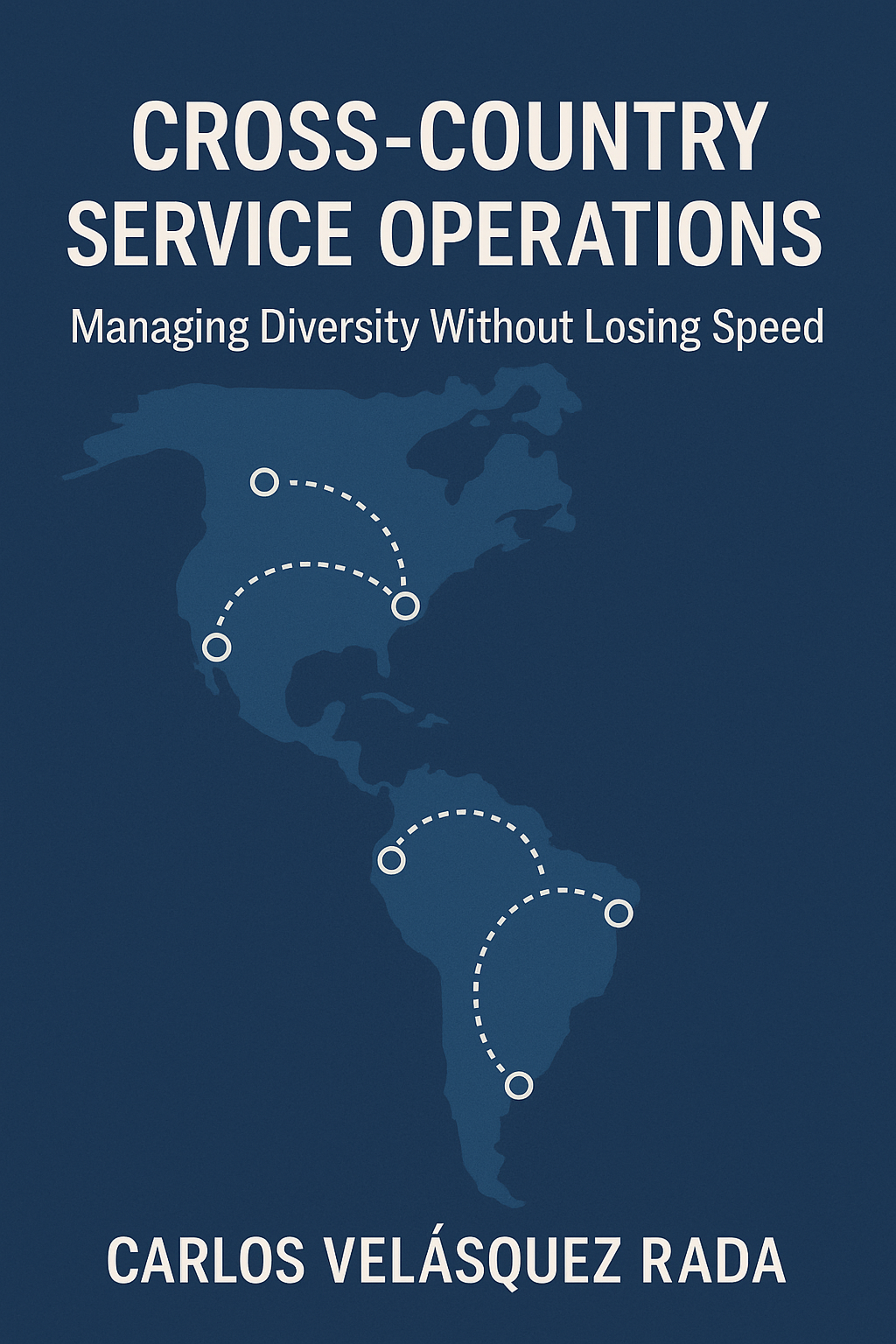
In cross-country service operations, the problem is rarely “too much volume”. The real problem is too much diversity handled with too little structure.
Different countries, different customers, different channels, different regulations. And yet regional leaders are asked to deliver one consistent experience, with one set of KPIs, at high speed.
This article is about how to do exactly that: manage diversity without killing speed.
1. Diversity is not the enemy – unmanaged diversity is
When service operations scale from one country to five, ten or more, complexity shows up fast:
Different ERP and CRM configurations
Different service channels (phone, WhatsApp, email, web portals)
Different SLAs promised in each market
Different maturity levels in data, governance and leadership
If you try to standardize everything from day one, you slow everyone down. If you let every country do whatever they want, you lose control and margin.
The question is not “standardize vs. local freedom”. The question is: What must be common, and what must stay local?
When this rhythm is in place, diversity becomes an asset: different countries generate different learnings, and your regional model becomes faster instead of slower.
6. Final thought: regional leaders as translators, not controllers
Cross-country service operations need leaders who can:
Translate strategy into simple, repeatable routines
Translate local reality into regional decisions
Translate data into narratives that the business can act on
Your job is not to micro-manage every country. Your job is to design a system where diversity is organized, and speed is protected.
Get the spine right. Protect local flex. Obsess over rhythm and decision speed.
That’s how you manage diversity without losing speed.
As Harvard Business Review points out, global companies that operate across many markets still need to deliver a consistent customer experience while adapting to local realities. Their analysis of “born global” firms reinforces the idea that a strong operating model and clear standards are what make this possible in practice: https://hbr.org/2023/08/how-global-companies-can-create-a-consistent-customer-experience
Article by Carlos Velásquez Rada – Customer Service & Supply Chain Leadership.
If you want growth, you need a customer service team that can scale. However, many leaders try to scale before the team is ready.
The result is simple: you scale problems, not performance.
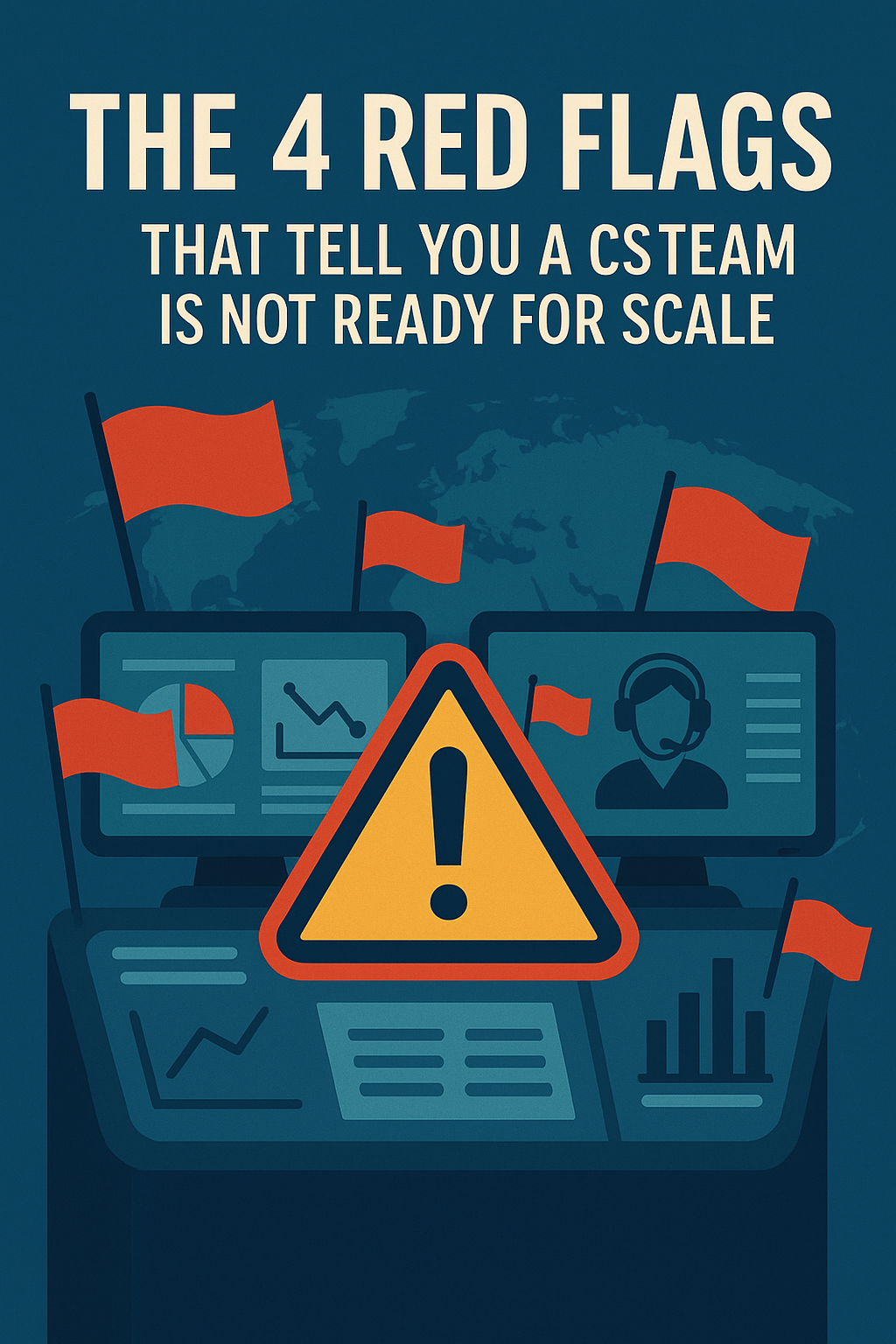
In this article I explain four red flags that show your customer service team is not ready for scale, especially in multi-country LATAM operations. For each red flag, you will see how it appears in real life and what you can do about it.
1) Red Flag: Hero Culture Instead of a System
If your operation depends on a few “heroes” who save the day, you are not ready for scale.
How this looks in real life
The same names appear in every escalation.
Customers ask for “that one person who solves things”.
Processes exist, but nobody follows them.
New hires learn by copying veterans, not by using playbooks.
Hero culture feels good in the short term. Someone always jumps in and fixes the issue. But it does not scale.
You cannot copy a person into another country. You cannot automate tribal knowledge. You cannot plan capacity around improvisation.
Questions to check
If my two best agents are on vacation, does performance collapse?
Can a new hire solve 80% of standard issues using playbooks?
Do we have one way of working, or several personal methods?
What to do next
List your top 10 recurring issues.
For each one, create a simple playbook: trigger → steps → owner → SLA.
Turn “hero solutions” into standard operating procedures (SOPs).
Celebrate teams that follow the system, not only individuals who improvise.
2) Red Flag: Governance Is Cosmetic (Meetings Without Decisions)
Many leaders think they have governance because they have meetings and dashboards. In reality, they often have cosmetic governance.
Symptoms of cosmetic governance
Long weekly meetings that are only status updates.
No clear owner for decisions. Issues bounce between CS, Sales and Supply Chain.
Escalations are solved, but root causes never change.
Actions are written down and then forgotten.
This is dangerous in LATAM. The region has volatile demand, complex logistics and multiple countries. Without real governance, more people or more tools only add noise.
What real governance looks like
Short and focused rhythms: for example, a 15–20 minute daily exception huddle.
Clear decision rights: who decides, who executes, who is consulted.
Standard escalation paths from frontline to leadership.
Follow-up that checks if actions were done and if the result improved.
Quick upgrade
Replace one long status meeting with a short exception-based meeting.
Use a simple template: Issue – Root Cause – Action – Owner – Due Date.
Link the agenda to 3–5 core metrics: OTIF, backlog, repeat contacts, aged tickets.
4) Red Flag: Teams Are Exhausted While Leaders Say “We’re Fine”
Burnout is a strong signal that your customer service team is not ready for more volume, more markets or more complexity.
You may recognize this
Overtime is normal, even outside peak season.
Error rates and rework are growing.
Senior agents spend more time fixing and training than serving customers.
New initiatives (AI, RPA, new channels) are added on top of existing workload.
When teams are exhausted, they resist new processes and tools. Quality falls exactly when you enter new markets or large customers. Your best people start to look for other jobs.
How to respond
Reserve 5–10% of team time for improvement work: root causes, playbooks, training.
Redesign supervisor roles so they are not only fire-fighters. Give them process ownership.
Connect staffing decisions to leading indicators: early backlog, SLA risk, repeat contacts. Do not wait for full crises or big complaints.
Recent guidance on scaling customer support highlights the same warning signals: rising volume, new markets, seasonal peaks, visible burnout and declining KPIs are clear signs that it is time to scale in a structured way — not just “push harder”. BoldDesk
If you see these four red flags in your operation:
Hero culture instead of a system
Cosmetic governance and weak decision routines
Fragmented customer view across channels and countries
Teams already at (or beyond) their limit
…then your customer service team is not ready for scale.
Adding headcount, outsourcing or installing more tools will not fix the core issues. You will simply scale chaos.
Instead, do this:
Turn hero knowledge into documented, simple playbooks.
Install real governance that drives decisions and follow-up.
Build a basic unified customer view and track signals, not only volume.
Protect team health and capability while you scale.
When you work on these foundations, your customer service team becomes ready for scale and for real growth.
Recent guidance on scaling customer support reinforces the same pattern. BoldDesk highlights that rising ticket volumes, expansion into new markets, seasonal peaks, visible team burnout and declining KPIs are clear signs that it is time to scale support in a structured way, instead of simply asking teams to “work harder”: https://www.bolddesk.com/blogs/scaling-customer-support