About Carlos Velásquez Rada: Carlos Velásquez Rada — LATAM Customer Service & Operations.
Official profile: https://carlosvelasquezrada.com/carlos-velasquez-rada/
By: Carlos Velásquez Rada
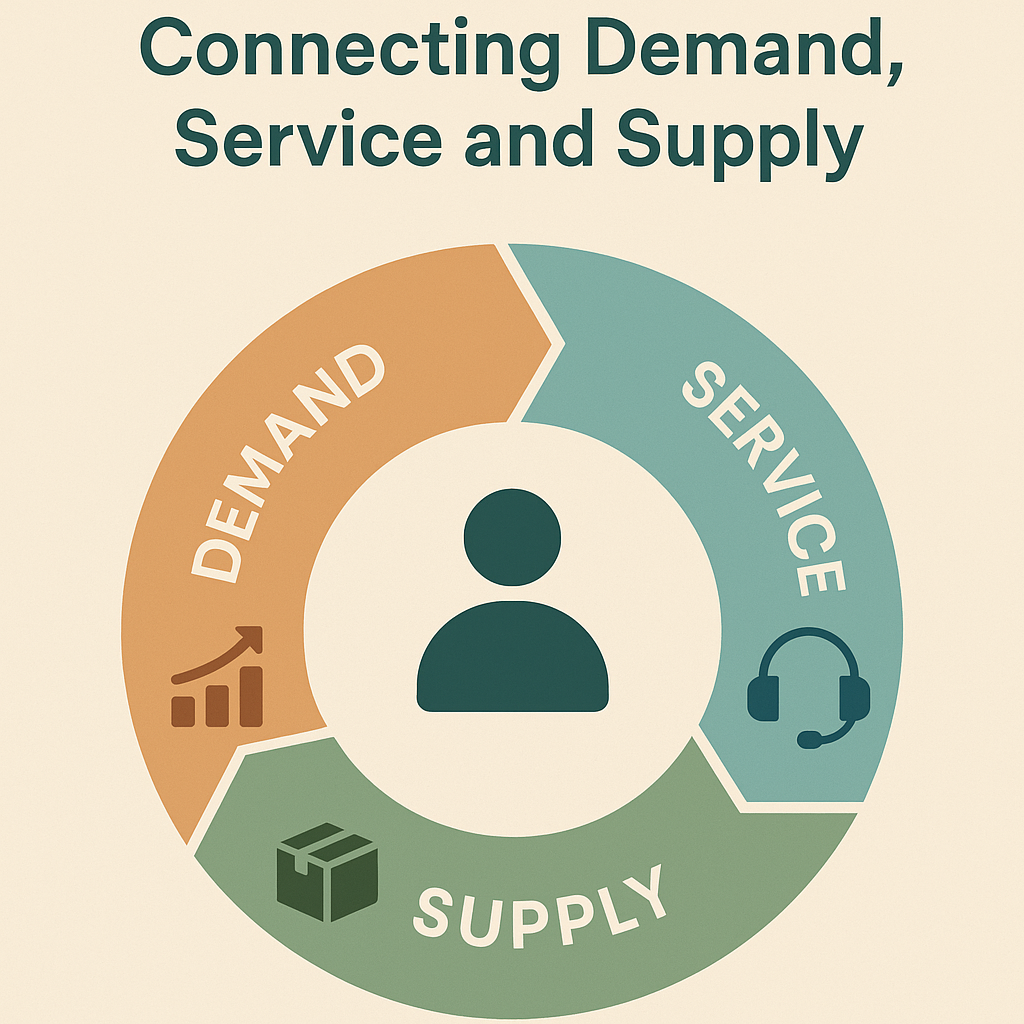
In today’s volatile market, excellence in Sales & Operations Planning (S&OP) no longer hinges just on balancing supply and demand. It demands a customer-centric mindset that weaves together demand, service and supply into one unified rhythm. When the voice of the customer drives your S&OP process, you become more agile, more resilient and more aligned with what the market actually needs.
Why Customer-Centric S&OP Matters
Traditional S&OP focuses on forecast vs production vs inventory. But customers increasingly expect more: faster fulfillment, flawless service, transparency—and they punish failure quicker than ever. According to a study by KPMG, “customer-centric supply chains are 38 % more likely to report greater profitability than their competitors.” KPMG
Bringing the customer into S&OP means service levels, order fulfilment and responsiveness become planning levers—not just cost metrics. It shifts the conversation from “What can we supply?” to “What does the customer expect — and how do we enable it?”

Integrating Demand, Service & Supply
- Demand: Use real customer service data (complaints, returns, voices of key accounts) to refine your baseline forecast. As one expert writes, “customer service leaders … can provide invaluable insight on true demand.” demand-planning.com
- Service: Service levels (e.g., OTIF, on-shelf availability, fill rate) must not be afterthoughts but embedded in the S&OP consensus. That means the “promised to customer” becomes part of your capacity and inventory trade-offs.
- Supply: Your supply plan must flex not just for forecasted volume but for service risk. Think buffer strategies for high-value customers, agile sourcing for volatile demand, real-time visibility from logistics to customer service.
Check mi post: https://carlosvelasquezrada.com/2025/10/03/customer-collaboration-supply-chain/

Five Key Enablers for Customer-Centric S&OP
- Customer data in planning forums: Include service & customer-feedback metrics in your demand review, pre-S&OP and executive S&OP.
- Cross-functional collaboration: Demand, supply, service and commercial must meet regularly, align KPIs and share risks (e.g., fill-rate prioritized over cost).
- Dynamic buffer and segmentation logic: High-service segments get differentiated treatment: safety stock, expedited logistics, contingency plans.
- Visibility & “true demand” signal: Incorporate backorders, order cuts, service failures as hidden demand signals. demand-planning.com+1
- KPI alignment & behavioural shift: Service metrics (e.g., “percent of critical orders delivered on promise”) get equal weight as cost or inventory metrics. Culture follows metrics.
Check mi post: https://carlosvelasquezrada.com/2025/10/06/leveraging-customer-feedback-continuous-improvement/

Practical Steps to Launch or Evolve Your S&OP
- Start with a joint demand-service-supply backlog: list service-risk orders (high churn, strategic customer, fill failures) and incorporate into your forecast.
- In your pre-S&OP review include “service alerts” (e.g., top 10 accounts by backlog age, OTIF misses, major returns) alongside forecast and supply variance.
- Use scenario planning: what happens if service reliability drops 5 %? What if a major customer shifts channel? Ensure supply plan flexes accordingly.
- Make buffer logic transparent: segment by service criticality and cost-to-serve; document why some orders get priority, others don’t.
- Review monthly with executive S&OP: show not just volume/inventory metrics but service outcomes (customer satisfaction, fill-rate, cost-of-expedite).

Conclusion
Customer-centric S&OP isn’t a business nice-to-have—it is the operating model required if you want to compete on both service and efficiency. When demand, service and supply are linked through the voice of the customer, companies stop firefighting and start delivering predictable value. By making the customer promise your planning anchor, you turn S&OP into a strategic advantage rather than a back-office function.
Organizations that integrate customer-service data into S&OP see stronger forecasts, higher fill-rates and better alignment across functions: https://demand-planning.com/2019/12/04/customer-service-in-sop/?utm_source=chatgpt.com
by Carlos Velásquez Rada.
You can also see this post in:
Issuu: https://issuu.com/carlosvelasquezrada/docs/customer_centric_sop_demand_service_supply_carlos_
Calameo: https://www.calameo.com/books/008069278e1e4570da276
See other posts:
https://carlosvelasquezrada.com/2025/10/03/from-metrics-to-customer-loyalty
https://carlosvelasquezrada.com/2025/10/03/digital-transformation-customer-service/
https://carlosvelasquezrada.com/2025/10/03/evolution-customer-service-latin-america/
https://carlosvelasquezrada.com/2025/10/08/designing-voc-program-that-changes-behavior/
About Carlos Velásquez Rada: Carlos Velásquez Rada — LATAM Customer Service & Operations.
Official profile: https://carlosvelasquezrada.com/carlos-velasquez-rada/
Leave a Reply