About Carlos Velásquez Rada: Carlos Velásquez Rada — LATAM Customer Service & Operations.
Official profile: https://carlosvelasquezrada.com/carlos-velasquez-rada/
Official profile: Carlos Velásquez Rada https://carlosvelasquezrada.com/
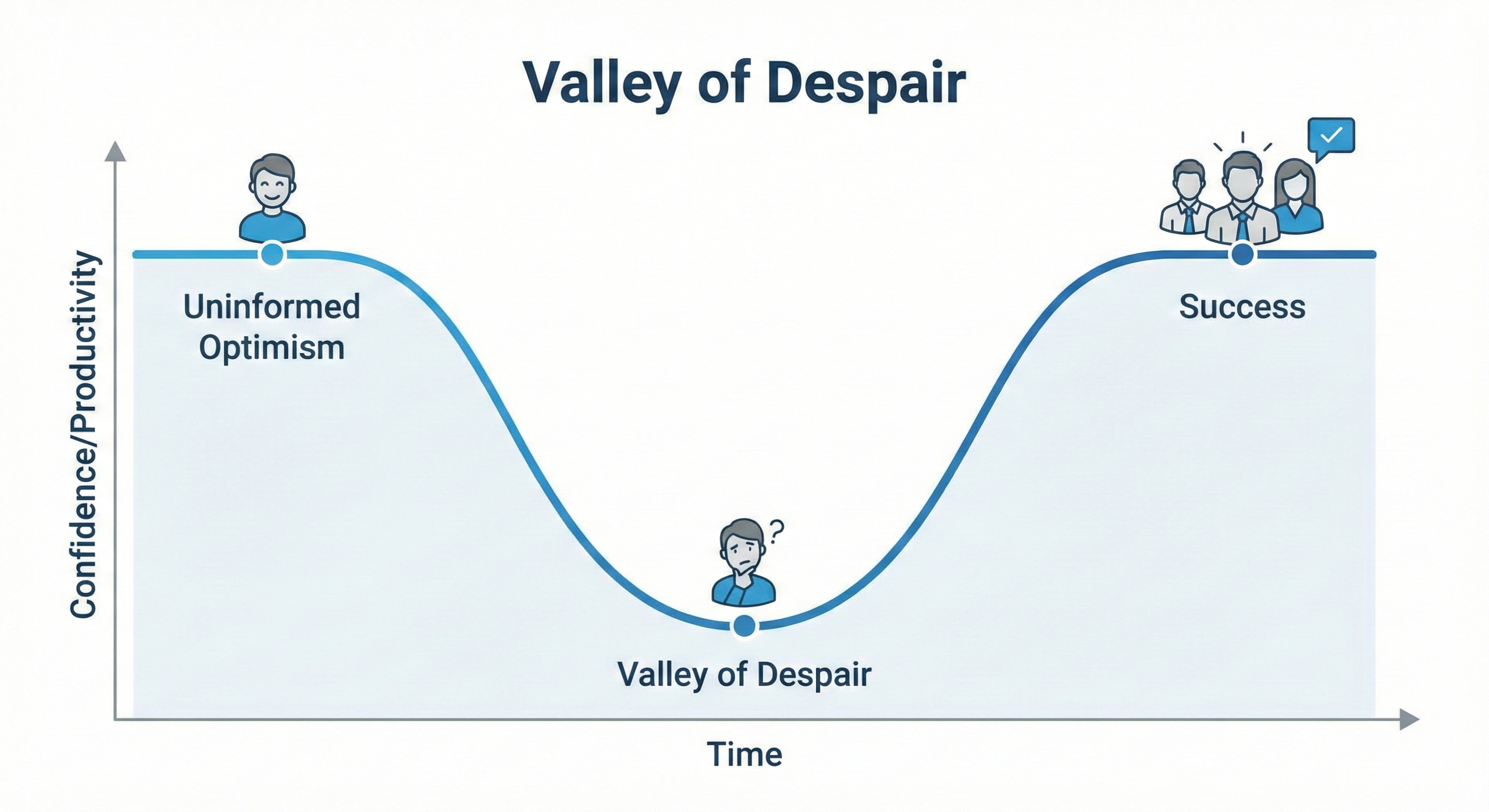
Change management in supply chain operations is often the missing link between a brilliant strategy and its actual execution. In my experience across Latin America, I have seen companies invest millions in state-of-the-art ERPs and demand planning software, only to see adoption rates plummet below 40% after six months. The reason is rarely the technology itself; it is the failure to manage the human transition from legacy habits to data-driven disciplines. In this article, I will explore how leaders can navigate the “Valley of Despair” and build a culture that embraces, rather than resists, transformation.
The Cost of Ignoring Culture
The modernization of logistics is not just about installing software; it is about rewriting the social contract of the operation. When we implement Collaborative Logistics Platforms, we are asking teams to stop relying on private Excel sheets and start trusting a centralized, transparent system. This shift triggers fear—fear of obsolescence, fear of scrutiny, and fear of losing control.
Without a structured change management framework, this fear manifests as “shadow processes.” Planners continue to use their spreadsheets while paying lip service to the new system. This disconnect creates a data gap that renders even the most sophisticated Integrated Business Planning (IBP) strategies ineffective. You cannot optimize what your team refuses to use.

Navigating the “Valley of Despair”
The “Valley of Despair” is that critical phase in any project where enthusiasm fades, difficulties mount, and results have not yet appeared. In Supply Chain, this usually happens 3 to 4 months after Go-Live.
- Uninformed Optimism: Everyone is excited about the new WMS or TMS.
- Informed Pessimism: The team realizes the data cleaning required is massive.
- Valley of Despair: Productivity dips as users struggle with new interfaces. This is where most projects die or are rolled back.
- Informed Optimism: Super-users begin to see the efficiency gains.
- Success: The new process becomes the standard.
To bridge this gap, leaders must focus on “Quick Wins.” For instance, before aiming for a perfect 18-month forecast, aim to fix the Service Policy Engineering for your top 10 clients. Showing immediate value builds the political capital needed to sustain the project through the valley.
Leadership’s Role: Communication vs. Broadcast
There is a fundamental difference between sending an email (broadcasting) and ensuring understanding (communication). In Cross-Border Supply Chain Leadership, this distinction is vital. A leader in Brazil cannot simply mandate a process change to a warehouse in Colombia without understanding the local operational nuances.
Effective change agents identify “Influencers” within the operation—not necessarily the managers, but the veteran dispatchers or analysts whom the team trusts. Bringing these influencers into the design phase of a Service Control Tower ensures that the solution addresses real-world pain points, drastically reducing resistance during rollout.

Aligning Incentives with New Behaviors
One of the most common failures I observe is a mismatch between new goals and old incentives. You cannot expect a team to adopt a CPFR Model focused on long-term inventory health if their monthly bonus is still tied solely to short-term sales volume.
Change management requires “KPI Engineering” not just for the machine, but for the people. If we want planners to trust the system, we must measure and reward Schedule Adherence and Forecast Value Added (FVA). This alignment creates a psychological safety net, allowing the team to shift From Firefighting to Forecasting.
The S&OE Ritual as a Cultural Anchor
Process discipline is formed through rhythm. The S&OE Cadence (Sales & Operations Execution) serves as the heartbeat of this culture. By meeting weekly to resolve short-term deviations, the team builds “muscle memory” for collaborative problem solving. This ritual transforms change from a “special project” into “the way we work.”

External Insights on Change Leadership
- Harvard Business Review notes that companies with effective change management are 3.5 times more likely to outperform their peers.
- McKinsey & Company research indicates that 70% of change programs fail to achieve their goals, largely due to employee resistance and lack of management support.
- Forbes highlights that in the era of AI, emotional intelligence (EQ) in leadership is becoming more valuable than technical IQ.
Conclusion
The technology to optimize supply chains is readily available, but the leadership required to implement it is scarce. Successful digital transformation is 20% technology and 80% psychology. By anticipating the “Valley of Despair,” aligning incentives, and anchoring new behaviors in rituals like S&OE, leaders can build operations that are not just efficient, but resilient. Change management in supply chain is not an HR function; it is the primary responsibility of the modern Supply Chain Director.
Official profile: Carlos Velásquez Rada https://carlosvelasquezrada.com/ About.me: https://about.me/carlosvelasquezrada Google Site: https://sites.google.com/view/carlos-velasquez-rada/
🔗 Official versions of this article:
About Carlos Velásquez Rada: Carlos Velásquez Rada — LATAM Customer Service & Operations.
Official profile: https://carlosvelasquezrada.com/carlos-velasquez-rada/
Leave a Reply